Organizations across manufacturing, utilities, facilities management, food processing, and public infrastructure face increasing pressure to improve asset performance while controlling costs. Strategic asset management has emerged as a critical business practice that helps organizations align maintenance activities with operational goals, risk management strategies, and long-term financial objectives.
A CMMS is often at the center of many successful strategic asset management programs. It provides the visibility, data, and accountability needed to manage assets throughout their lifecycle. The CMMS also helps maintenance teams make informed decisions that support organizational performance.
Strategic asset management goes beyond repairing equipment when it fails. It focuses on understanding asset health, prioritizing maintenance investments, reducing operational risk, and maximizing the asset’s value. CMMS software support helps organizations gain a structured approach with greater consistency and confidence.
Improving Maintenance, Reliability Performance
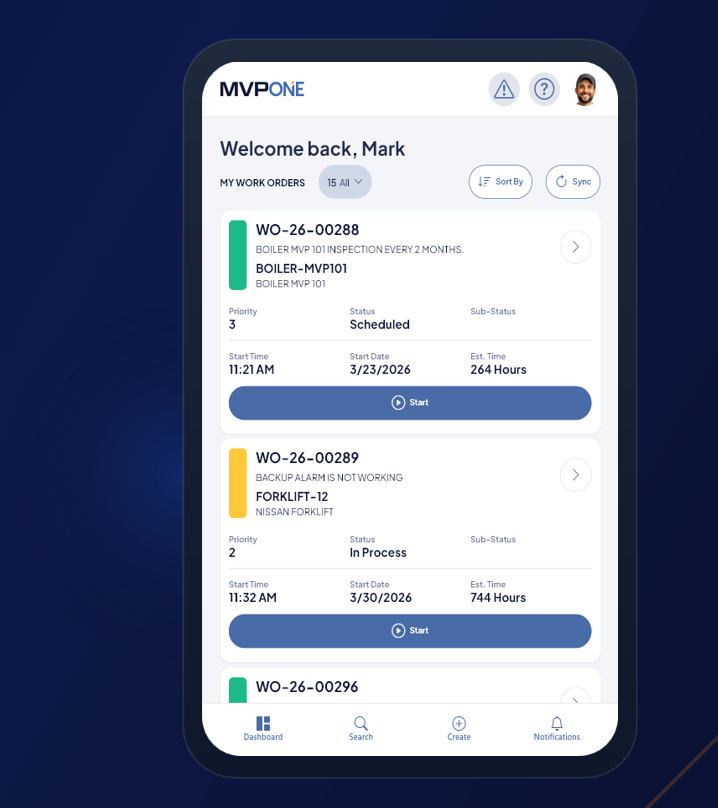
Maintenance and reliability professionals are responsible for keeping critical assets operating efficiently. A CMMS creates a centralized repository for asset information, work orders, maintenance histories, inspections, spare parts, and performance metrics. This allows maintenance teams to move toward preventive and predictive maintenance strategies.
For maintenance professionals, they gain greater visibility into daily operations. Work can be prioritized based on asset criticality, labor resources can be more effectively allocated, and recurring equipment issues can be identified. Teams have access to accurate and immediate information that supports faster and more informed decision-making.
Reliability professionals benefit from the ability to analyze asset performance trends over time. Failure data, maintenance costs, downtime events, and work order histories can be used to identify root causes and support continuous improvement initiatives. Reliability-centered maintenance programs become more effective when supported by accurate asset data and standardized maintenance processes.
Strategic asset management also helps organizations extend equipment life. When assets are maintained according to documented schedules and performance data is consistently tracked, organizations can avoid premature asset replacement while preventing failures.
From a day-to-day perspective, maintenance professionals spend more time executing value-added work. Reliability experts gain access to meaningful performance metrics that support better planning, analysis, and asset optimization efforts.
Delivering Business Value for Executives
Strategic asset management is not just a maintenance initiative. It also is a business strategy that impacts financial performance, operational reliability, safety, and regulatory compliance.
Executives often face difficult decisions regarding capital investments, maintenance budgets, workforce planning, and risk management. A CMMS provides the data needed to support those decisions with greater accuracy.
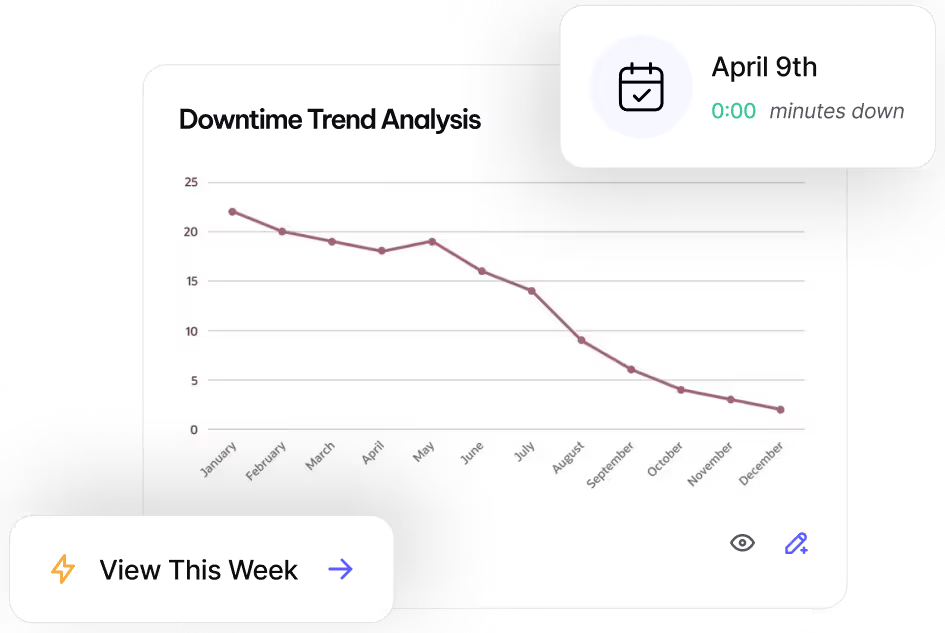
Asset performance indicators, maintenance costs, downtime trends, and lifecycle information can be tracked and reported through dashboards and analytics tools. This visibility allows leaders to understand which assets are delivering value, and which may require additional investment, replacement, or operational changes.
Financial planning also improves when organizations have access to accurate asset information. Maintenance expenditures can be analyzed against equipment performance, which helps executives determine the most cost-effective option.
Risk reduction is another major benefit. Equipment failures can create safety hazards, environmental concerns, production disruptions, and compliance challenges. Strategic asset management helps organizations identify and address potential risks before they become operational issues.
Executives also benefit from improved organizational alignment. When everyone works from a common set of data and performance objectives, this creates greater accountability and supports enterprise-wide asset management goals.
For technology leaders, a CMMS is a foundation for digital transformation initiatives. Asset data can support advanced analytics, condition monitoring technologies, mobile workforce applications, and future predictive maintenance programs. As organizations continue investing in connected operations, reliable asset information becomes more valuable.
Long-Term Strategic Asset Management Benefits
Strategic asset management helps maintenance professionals perform work more efficiently, enables reliability experts to improve asset performance, and provides executives with the insights needed to make informed business decisions.
Organizations that leverage a CMMS as part of their strategic asset management strategy are better positioned to reduce downtime, improve asset reliability, control costs, and maximize the return on asset investments. In an environment where operational efficiency and reliability remain competitive advantages, access to accurate maintenance and asset data has become a business necessity rather than a convenience.
As asset-intensive organizations continue to face increasing operational demands, strategic asset management supported by a modern CMMS such as MVP One will remain a key driver of long-term performance, resilience, and sustainable growth.
Schedule a demo and start building a maintenance strategy that’s reliable regardless of situation and environment.