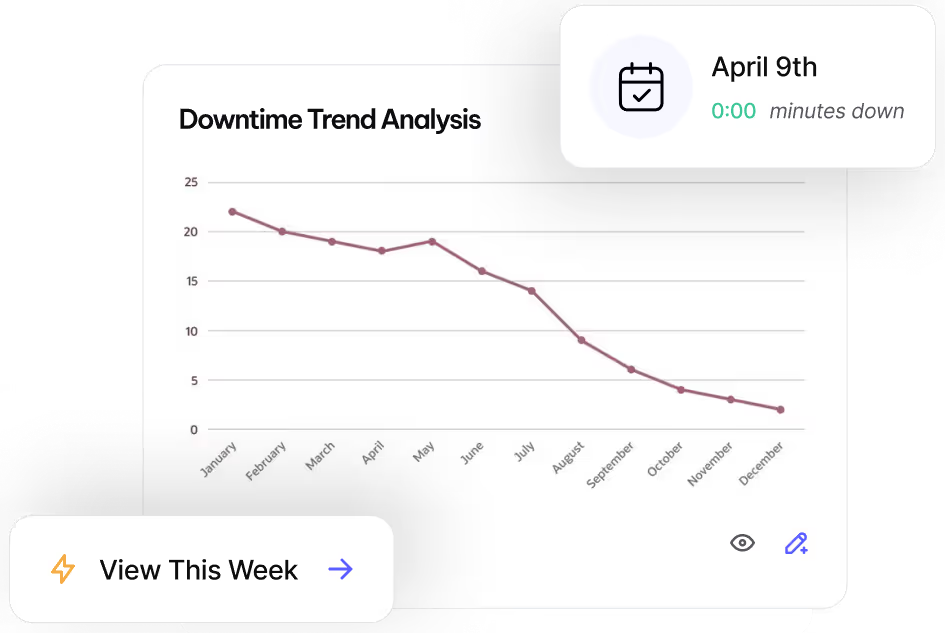

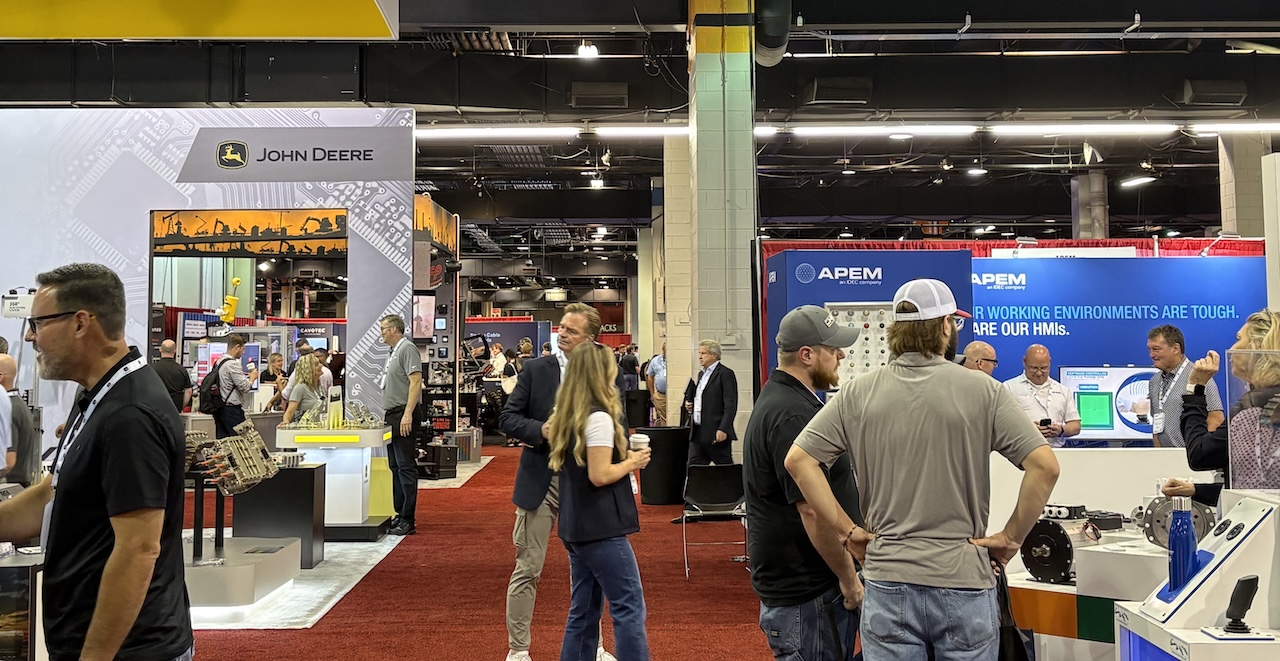
The off-highway industry is emphasizing connecting systems, data, and equipment to make vehicles and the systems supporting them stronger. Discussions at iVT Expo 2026 in Rosemont, Ill., highlighted how predictive maintenance can help companies improve the longevity of their equipment.
There’s been a great deal of turbulence the last few years with the agriculture and construction industries, in particular, dealing with major headwinds due to geopolitical events. They must get smarter with asset management strategies and leverage tools like AI and telematics to get information to stakeholders faster.
For maintenance professionals, this trend represents a shift toward using connected data to reduce downtime and support better operational decisions.
Integrated Technology Creates Smarter Maintenance Operations
Several presentations and panel discussions focused on the growing role of connected technologies in off-highway equipment. Industry experts discussed how sensors, GPS, cameras, advanced control systems, machine learning, and cloud connectivity are generating unprecedented amounts of operational data.
Dr. Holly Mayton, the lead of research partnerships and science policy for John Deere, explained how connected technologies help organizations collect hundreds of data points that support better decision-making and create verifiable digital records of operations. The road ahead, according to Mayton, is focused on fuel, technology, and policy.
“All of these will help decarbonization through energy security, rural economic growth and emissions reduction,” Layton said.
For maintenance professionals and reliablity teams, the connected environment helps people do their jobs better because it improves visibility.
The answer lies in visibility. When asset information is centralized, maintenance workers spend more time solving problems. Reliability specialists gain access to historical asset performance data, which allows them to identify recurring failure patterns and improve maintenance strategies. Executives gain stronger insight into fleet health, operating costs, and asset utilization across the organization.
Sean Howley, sales application specialist for Bailey International, highlighted how modern equipment can provide feedback on engines and other components while delivering alerts and instructions that support preventive maintenance activities.
“Preventive maintenance comes in because we can provide feedback on the engine and other parts and send instructions,” he said.
Troy Hardy, IoT solutions engineer for Elevat, described how connected machine intelligence platforms use AI-powered troubleshooting and alerts to give field personnel real-time support through tablets and especially mobile devices, which Hardy said is critical.
“Not everyone has a tablet on-hand, but pretty much everyone has a phone on them when they’re working.”
Customer service tickets also can be routed through a CMMS, further connecting operations and maintenance workflows.
CMMS Systems Connect Data to Business Outcomes
While many discussions focused on connected equipment, the technologies’ value depends on an organization's ability to act on the information they generate. This is where a CMMS becomes a critical component of the maintenance technology stack.
A CMMS serves as the central system that converts equipment data into actionable maintenance activities. When integrated with telematics platforms, IoT sensors, enterprise resource planning systems, and service applications, a CMMS can automatically generate work orders, schedule preventive maintenance tasks, track repair histories, manage inventory, and document asset performance.
Hardy described how Elevat’s Connected Machine Intelligence, which is a mobile app that uses AI, can provide a high-level and specific view of what’s happening in a facility or out in the field.
“AI serves as a technician and goes through the alarm and troubleshooting and it’s interactive,” he said. “Users can ask questions what’s been inputted and gain insights.”
As off-highway equipment becomes more connected, maintenance departments face data challenges. Without a structured maintenance management platform, valuable information can remain isolated in multiple systems. A CMMS helps eliminate these data silos and provides a single source of truth for maintenance teams and leadership.
Organizations that integrate these technologies with a modern CMMS are better positioned to transform data into action. This strengthens preventive maintenance programs and support long-term operational performance.
Learn about the industries MVP One serves.