Unmanaged maintenance storerooms rarely look like financial problems at first. They look like shelves, bins, cabinets, spare motors, belts, bearings, and parts that “might be needed someday.” However, beneath that surface, many facilities are carrying a serious operational and financial risk: Ghost stock.
These are parts that appear to exist in the CMMS, but cannot be found. Examples include:
- Parts sitting in the wrong bin.
- Parts that were never checked out.
- Parts that technicians hoard at their workbenches because they do not trust the storeroom to have what they need.
For managers, the problem goes beyond inventory accuracy. Ghost parts create a cascading effect that costs people time and money. Accountability and transparency are not a given.
With MVP One MVP 307 inventory storeroom management training, presenter Steve Janow frames the issue in practical terms: before a facility can optimize inventory, it must first control it.
“You can’t optimize until you have these things in place,” Janow said. “First off, you’ve got to get control.”
That control often starts with a dedicated inventory clerk or storeroom attendant.
The Storeroom Is Not Just a Room
While a maintenance storeroom is often treated as a passive space, Janow emphasized it should function as an active service center for maintenance and operations. The goal is not simply to hold parts. The goal is ensuring the right parts are available, identifiable, accessible, and properly tracked when equipment fails or scheduled work is ready to execute.
Janow said the purpose of parts inventory is to support technicians when they need to replace failed equipment parts and return assets to service quickly. He noted facilities keep spare parts so they can respond to equipment failures “without needing to order and then wait for parts to be delivered.”
That distinction matters. If a technician spends 20 to 30% of their workday searching for parts, the facility is not just losing time. It is paying skilled labor rates for non-skilled search activity.
Consider a simple business case. If a technician earns $35 per hour and spends 90 minutes per day searching for parts, that is $52.50 in lost productive time per technician per day. Across 10 technicians, that becomes $525 per day. Over 250 workdays, the annual labor waste reaches $131,250. Those costs don’t even include other factors such as downtime or the cost of inaccurate inventory, which make the final bill much higher.
In that context, the salary of a dedicated inventory clerk can become easier to justify by comparison. The question becomes less about whether the facility can afford a storeroom role, but rather if they can afford not to have one.
The Hidden Cost of “We Thought We Had One”
Ghost stock becomes expensive when the CMMS says a part is in stock, but the technician cannot find it. As a result, downtime increases and the facility is forced to choose whether to expedite replacement or delay the repair entirely. Both options come with their own risks, but neither is an appealing option and can have long-term effects.
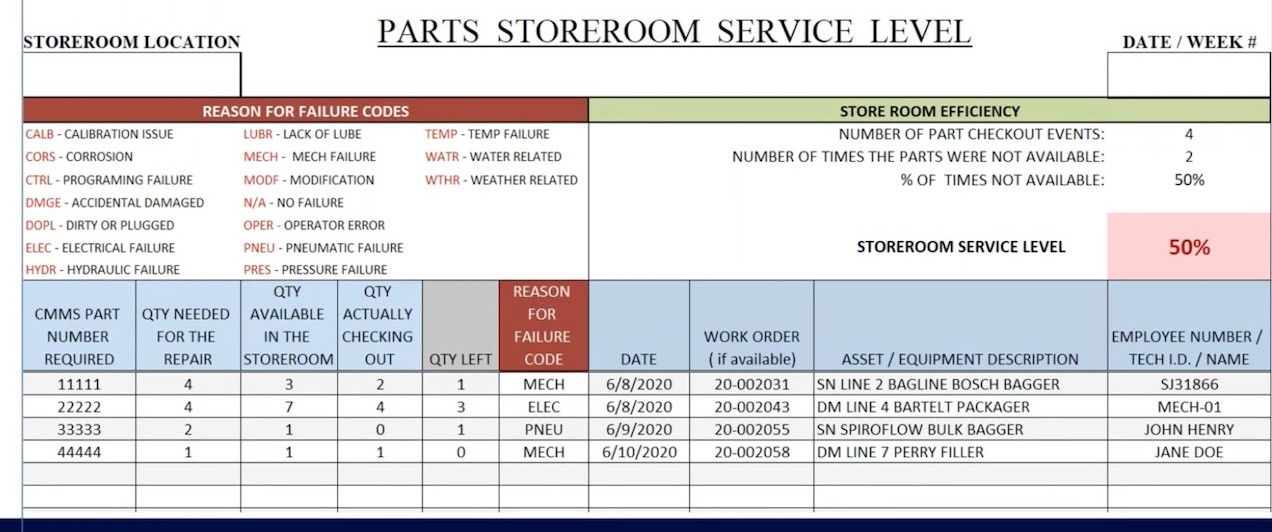
Janow provided an example of why storeroom service levels matter. If a technician needs four bearings but the storeroom only has three, the technician may check out two and complete part of the work even though the full requirement was four. In that case, Janow explains, the storeroom only satisfied 50% of the need. “Having the parts in stock when you need them is key,” he said.
That example shows why inventory accuracy is not an administrative preference. It directly affects maintenance execution. A storeroom may appear stocked, but if the information is unclear or inaccurate, maintenance teams cannot rely on it.
As a result, the financial consequences escalate including:
- Duplicate orders occur when buyers reorder parts that already exist but cannot be located.
- Rush shipping happens when the system shows stock that is not actually available.
- Stockouts trigger downtime when critical parts are missing.
Over time, technicians lose confidence in the process and start keeping “just-in-case” parts close by, which exacerbates the existing problem.
Those private stashes may feel practical to the technician, but they undermine the entire inventory system. Parts disappear from official counts, replenishment signals become unreliable, and leadership loses visibility into what is being used, where it is going, and why.
Why a Dedicated Inventory Clerk Changes the Equation
A dedicated inventory clerk does more than receive parts or straighten shelves. In a well-run maintenance organization, the role helps establish the foundation for reliability.
Janow described the storeroom position as “a crucial role in managing and maintaining inventory within a storeroom or warehouse environment.” That role includes organizing stock, tracking parts, receiving and verifying incoming shipments, and ensuring items are properly stored and accounted for.
That accountability is difficult to maintain when inventory responsibility is spread across buyers, planners, supervisors, and technicians who already have full-time responsibilities. Janow notes that many plants combine roles, with one person handling everything from purchasing to reporting. Janow also made it clear managing a storeroom can be a full-time job.
A dedicated inventory clerk can own the daily behaviors that keep a storeroom reliable:
- Confirming parts are received accurately and placed in the correct location.
- Maintaining clean, labeled, and accessible storage areas.
- Supporting cycle counts and identifying variances.
- Ensuring checkouts and returns follow procedure.
- Flagging excess, obsolete, or missing inventory.
- Helping leadership understand which parts are creating risk.
The role also allows skilled technicians to spend more time doing skilled work. If an inventory clerk saves each technician 30 to 60 minutes per day, the labor recovery alone can support the business case for the role.
Storeroom Control Starts with Structure
Before a facility can make the business case for a clerk, it should look honestly at its current storeroom structure. Janow emphasized the need for foundational controls. “You gotta have the right people,” he said. “You gotta have the knowledge. And then you have to have some kind of a system in place.”
That system is where a CMMS like MVP One becomes essential. A controlled storeroom depends on:
- Accurate part records
- Standardized descriptions
- Stock and non-stock designation
- Part classes
- Manufacturer IDs
- Model numbers
- Vendor information
- Warehouse locations
- Bin-level storage data
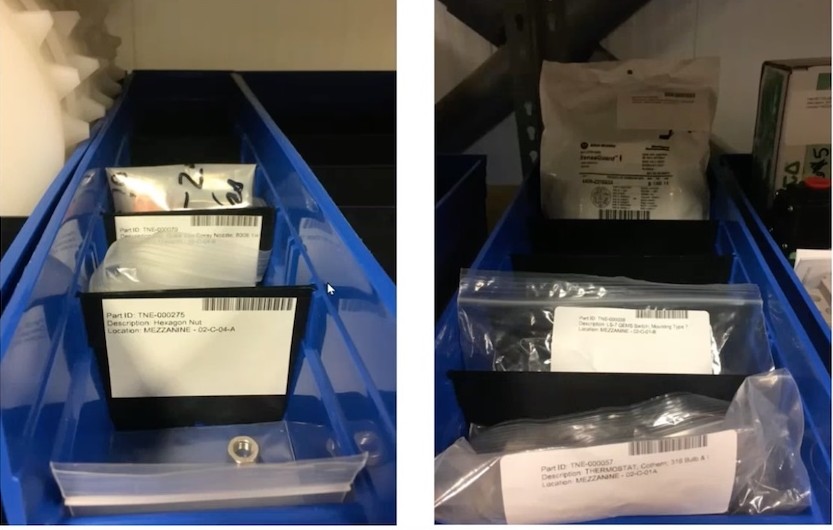
Janow also stressed the value of part naming standardization, using a noun-qualifier-description structure. For example, a part description should make clear what the item is, what kind of item it is, and what identifying information helps differentiate it from similar parts. This may seem like a small detail, but standardized naming reduces search time, duplicate records, and ordering confusion.
The same principle applies to locations. Every part should have a defined home. Janow described the ideal as a specific location “right down to the bin of the little cubby hole that it’s sitting in.”
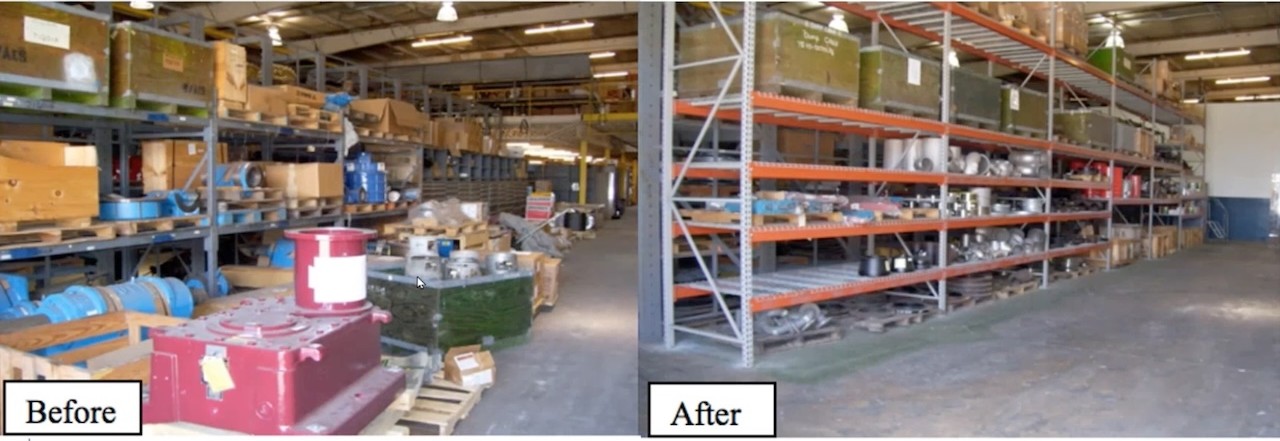
When locations are vague, cycle counting becomes harder. When multiple parts share the same bin without dividers or labeling, errors multiply. When shelves are cluttered or unlabeled, technicians lose time and inventory records lose credibility.
The ROI Case: Search Time Versus Clerk Salary
For finance leaders, the strongest argument for a dedicated inventory clerk is often labor recovery. Technician time is expensive, and search time is waste.
A simple ROI model can help:
- Estimate the number of maintenance technicians.
- Estimate average hourly labor cost.
- Estimate daily time lost searching for parts.
- Multiply by workdays per year.
- Compare the result to the loaded cost of an inventory clerk.
For example, a facility with 12 technicians earning a loaded labor rate of $45 per hour loses $270 per day if each technician spends 30 minutes searching for parts. At 250 workdays per year, that is $67,500 in lost labor productivity. If search time averages 60 minutes, the annual loss doubles to $135,000.
That still does not include the cost of stockouts, downtime, duplicate orders, emergency purchase orders, or overnight freight. Janow highlighted emergency purchasing as a warning sign, asking whether facilities have “excessive emergency purchase orders” and explaining that tracking purchase order types in MVP One can help identify how often emergency buying occurs.
A dedicated clerk can help reduce those costs by keeping inventory accurate, enforcing checkout processes, and identifying replenishment issues before they become urgent.
Accountability Is the Difference Between Inventory and Control
One of the most important benefits of CMMS-based storeroom control is accountability. It is not enough to know a part left the shelf. Leadership needs to know where the part is going and what it is being used for.
Janow made this point when discussing technician checkouts. If parts are not checked out properly, cycle counts suffer, adjustments increase, and the facility loses visibility into actual usage. He described using MVP One filters to identify work orders where the description said a part was replaced, but no parts were checked out. At one plant, that review found 30 instances in a month where work orders referenced replaced parts but showed no part usage.
That’s where MVP One helps leadership move from assumptions to evidence. Inventory and stock movement reporting can show who checked out a part, what it was checked out to, and where inventory is moving. That creates accountability and transparency across the facility.
It also supports better decision making. If the same part is repeatedly checked out to the same asset, maintenance leaders can investigate whether the asset has a recurring failure mode. If adjustments spike in one cabinet or storage location, the storeroom process may need attention. If emergency orders keep occurring for the same type of part, min-max levels, lead times, or part classification may need to be revised.
From Storeroom Cleanup to Reliability Strategy
A well-managed storeroom is not just cleaner. It is more strategic. Janow connected inventory control to broader reliability practices throughout the presentation, discussing:
- Cycle counting
- Service levels
- Part classification
- Min-max replenishment
- Lead times
- Obsolete inventory
- Bill of materials
- Spare parts lists
- Job plan kitting
Each concept, Janow said, contributes to a higher reliability maintenance operation.
For example, kitting plays a key role in reliability. When planned work requires parts, a controlled storeroom allows those parts to be picked, verified, and staged before the job begins. That reduces delays and helps maintenance teams execute scheduled work more efficiently. Janow described kitting as assembling needed items together so “when a job is scheduled, the parts can be located and all parts are on hand.”
This is where the dedicated inventory clerk becomes a reliability enabler. The clerk is helping make planned work possible, reducing wrench-time waste, and supporting the shift from reactive maintenance to proactive maintenance.
Four Categories That Support the Business Case
Janow said that when making a strong business case for a dedicated inventory clerk, it should focus on four categories:
- Quantify labor waste. Estimate how much technician time is spent searching for parts, waiting on parts, or correcting inventory issues.
- Identify purchasing waste. Review duplicate orders, emergency purchase orders, rush freight, and parts purchased despite already being in inventory.
- Evaluate downtime exposure. Identify recent work orders delayed by missing parts, inaccurate quantities, or unclear locations.
- Document accountability gaps. Use CMMS data to show missing checkouts, high adjustment activity, or stock items without proper location, manufacturer, model, or replenishment information.
The business case should not be framed as adding overhead. It should be framed as protecting operational capacity, improving cash control, and reducing downtime risk.
Janow said, “You don’t know what you don’t know, but you can kind of go and look.”
With MVP One, maintenance and finance teams can go look. They can evaluate inventory value, identify missing part data, review transaction history, assess parts without replenishment, and use reporting to understand where control is strong and where ghost stock is draining the operation.
Stop Treating the Storeroom Like a Cost Center
A dedicated inventory clerk is a practical response to one of maintenance’s most persistent hidden costs. When storerooms are unmanaged, technicians search, buyers reorder, parts disappear, and leaders make decisions with incomplete data. When storerooms are controlled through clear procedures, the facility gains visibility into one of its most important maintenance assets.
MVP 307 training shows that storeroom optimization does not begin with advanced analytics. It begins with control. The right people, processes, and system structure make it possible to turn inventory from a black hole for cash flow into a measurable driver of maintenance reliability.
Enroll in "MVP 307 - Inventory Storeroom Management" to learn more.