Maintenance leaders are under growing pressure to reduce downtime while controlling costs. The debate between preventive and predictive maintenance has evolved. Today, high-performing teams are combining both approaches, supported by CMMS platforms, to drive reliability and operational performance.
Preventive maintenance follows scheduled intervals, using time- or usage-based triggers to service equipment before failure occurs. Predictive maintenance, by contrast, uses real-time condition data and analytics to determine when maintenance is required. While each strategy offers clear advantages, organizations view them as complementary rather than competitive.
Facilities that integrate predictive insights into preventive programs can cut maintenance costs and improve equipment availability. At the same time, preventive maintenance provides a consistent baseline of care required to support critical assets and compliance requirements.
Why Preventive and Predictive Maintenance Work Better Together
Preventive maintenance remains the foundation for many operations because it is simple to implement and effective at reducing common failures. Scheduled inspections, lubrication cycles, and component replacements ensure assets operate within expected performance ranges.
However, preventive maintenance has limits. Adhering to a fixed schedule can lead to over-maintenance where equipment is serviced unnecessarily. When it comes to PM effectiveness, there should be at least one corrective action for every six work orders. If this is not the case, then it is reasonable to assume the asset is being over maintained and less attention is needed.
The opposite also is true, resulting in under-maintenance, where failures occur between planned intervals. These inefficiencies can increase labor costs and still leave organizations exposed to downtime. As with over-maintenance, companies should take note of corrective actions happening during work orders and adjust the schedule accordingly.
Predictive maintenance addresses those gaps by introducing condition-based monitoring. Sensors and analytics track variables such as vibration, temperature, and usage patterns to detect early warning signs of failure. Maintenance teams can then intervene at the optimal time, avoiding unnecessary work while preventing breakdowns.
When combined, the two strategies create a layered approach. Preventive maintenance ensures routine care and compliance while predictive tools refine timing and prioritize high-risk assets. This balance helps companies better allocate resources and focus their attention on what matters most.
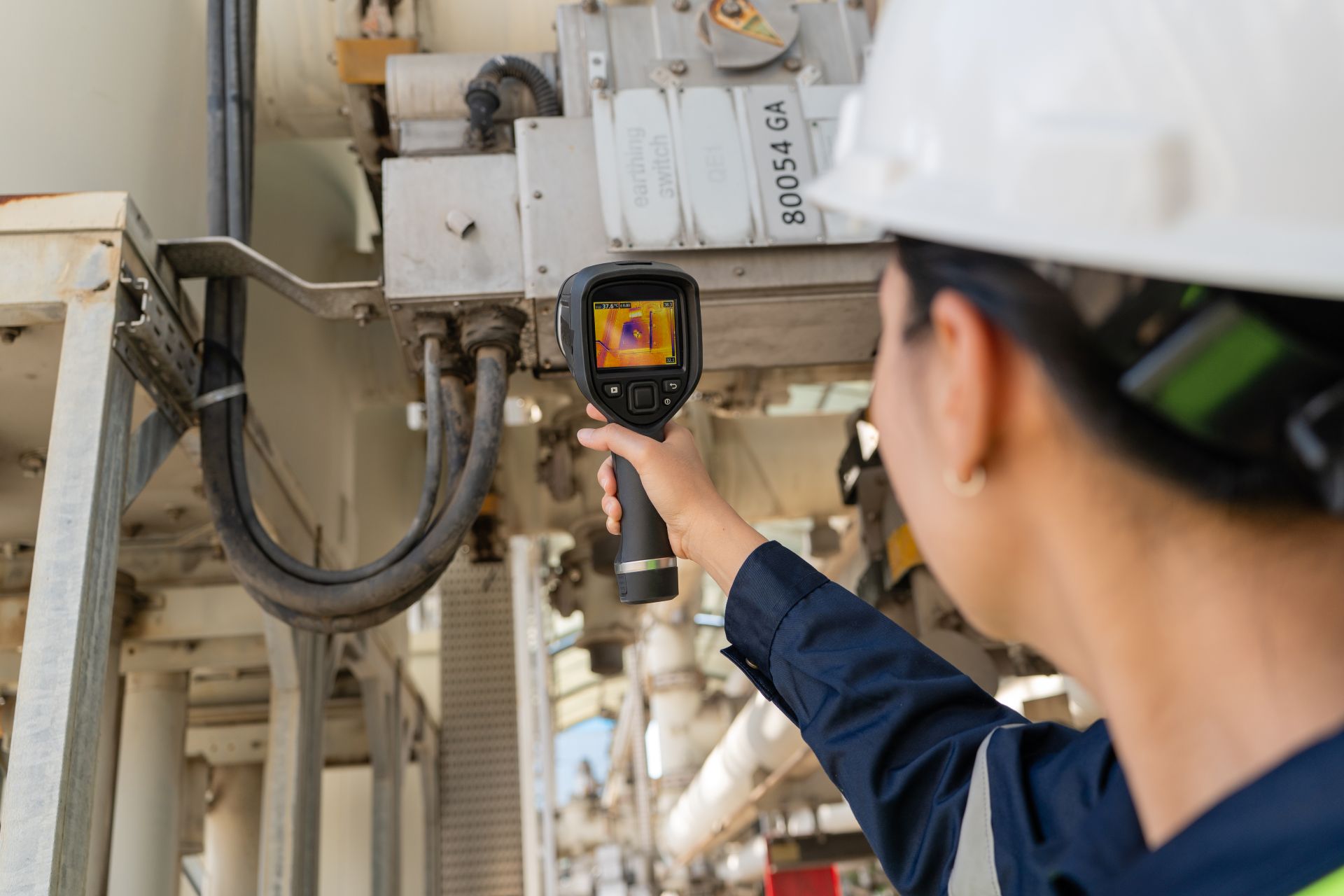
The potential-to-functional (P-F) failure curve plays a key role in this process. The P-F curve helps demonstrate the concept of using predictive technologies. Every asset starts out at peak performance, then gradually declines, which becomes the first line. Predictive maintenance tools such as thermography, vibration, and ultrasonic are some of the methods to uncover potential failures that are not visible to the human eye. Companies leverage these types of tools to give as much time to perform corrective work before reaching the second line, which leads to equipment failure.
For maintenance professionals and reliability engineers, combining predictive and preventive maintenance increases confidence in asset performance. For executives, it translates into measurable gains in uptime, cost control, and operational resilience.
How CMMS Technology Enables Better Maintenance Decisions
The ability to combine preventive and predictive maintenance depends on technology. A CMMS plays a key role in this merger by serving as the operational backbone that connects data, workflows, and decision-making.
A CMMS centralizes asset information, maintenance history, and work orders into a single system of record. This visibility allows maintenance teams to track performance trends, monitor compliance, and execute scheduled and condition-based work from a unified platform.
For maintenance professionals, this means less time spent searching for information and more time executing critical tasks. Automated work order generation and scheduling streamline preventive maintenance, ensuring tasks are completed on time without manual oversight. Predictive data integrations further enhance this capability by triggering alerts and work orders based on real-time asset conditions.
Reliability experts benefit from deeper insights. CMMS dashboards provide analytics on failure trends, asset performance, and maintenance costs, enabling more accurate root cause analysis and continuous improvement initiatives. This data-driven approach supports better decision-making and helps identify which strategies deliver the highest return.
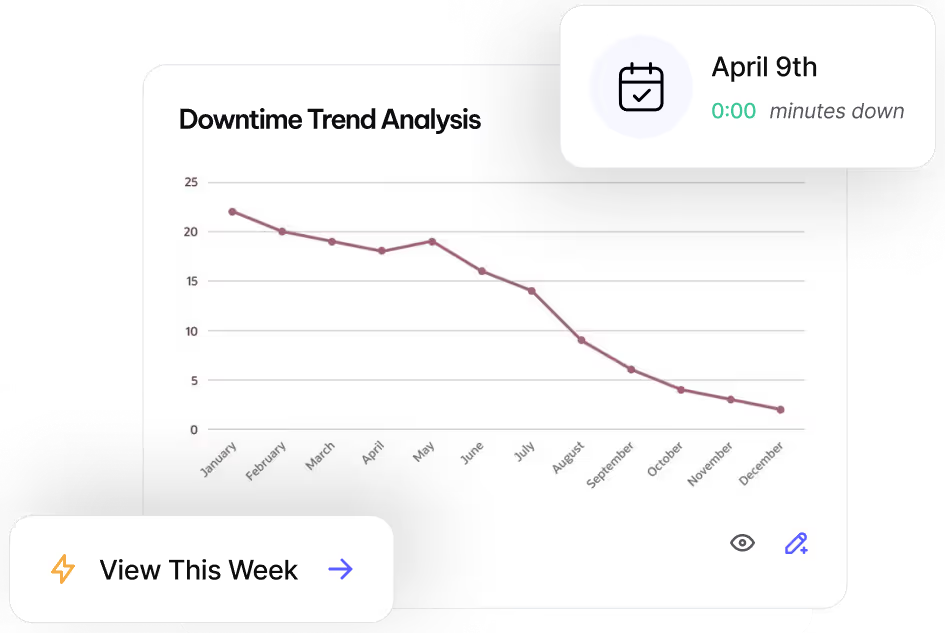
For executives, advantages extend to financial performance and strategic planning. CMMS platforms reduce unplanned downtime, one of the most significant cost drivers in operations, while improving labor productivity and asset lifespan. Organizations often see maintenance cost reductions after implementation, along with measurable gains in uptime and efficiency.
A CMMS also transforms maintenance into a strategic contributor. Providing clear metrics on performance, cost savings, and risk reduction, the system enables leaders to justify future maintenance strategies aligned with broader business goals.
A Strategic Shift Toward Integrated Maintenance
The evolution from reactive to preventive and predictive maintenance reflects a broader shift in how organizations manage critical assets. No single strategy is sufficient on its own. Instead, the most effective programs combine structured preventive routines with data-driven predictive insights.
CMMS technology makes this integration possible by connecting people, processes, and data to a single platform. The result is a more proactive, efficient, and reliable maintenance operation.